all about centella asiatica, the research-backed soothing green tea derivative
The herb that's been calming skin for centuries. Now with citations.
In the realm of skincare, few botanicals have a resume as impressive as Centella Asiatica. Also known as tiger grass or cica, this humble plant has been a cornerstone of Ayurvedic and traditional Chinese medicine for centuries, revered for its skin-soothing properties. Today, modern science is validating what ancient practitioners long knew: Centella Asiatica is a powerhouse of bioactive compounds that can calm, support, and protect the skin. Here's the research behind this botanical superstar.
What is Centella Asiatica?
Centella Asiatica is a perennial herbaceous plant native to Asia. Its efficacy isn't derived from the whole plant itself, but from a potent group of bioactive compounds called triterpenoid saponins, also known as centelloids. The four most important ones are:
- Madecassoside: the star player, renowned for its soothing and skin-supporting properties.
- Asiaticoside
- Madecassic acid
- Asiatic acid
These compounds work synergistically to deliver a multitude of benefits, making extracts of Centella Asiatica (often listed as Centella Asiatica Extract or Madecassoside on ingredient lists) a valuable addition to formulations.
The science-backed benefits
Extensive in vitro, in vivo, and clinical studies have documented the multifaceted benefits of Centella Asiatica for skin health.
1. Skin support and the look of firmness
This is the most well-researched and celebrated benefit of Centella Asiatica. The triterpenoids help support fibroblasts—the cells in the dermis responsible for producing collagen and other structural proteins.
A review in Phytotherapy Research explains that asiaticoside and madecassoside help support collagen I synthesis by encouraging fibroblast proliferation and promoting the formation of new blood vessels (angiogenesis), which is involved in delivering nutrients to skin tissue [1].
A clinical study on stretch marks found that a topical formulation containing Centella Asiatica extract at 0.5% significantly increased epidermal thickness and improved skin elasticity and vascularisation over 28 days, with self-assessed appearance improved by 42% [4]. This supports its use in products designed to improve the look of skin texture and elasticity.
2. Soothing support for reactive skin
Centella Asiatica is well known for its calming properties, making it ideal for soothing the look of irritation on sensitive and reactive skin.
Research has shown that the centelloids, particularly madecassoside, help modulate the skin's inflammatory response. This action helps reduce the look of redness, swelling, and discomfort associated with reactive skin [3].
3. Antioxidant protection
The bioactive compounds in Centella Asiatica are effective antioxidants that help protect the skin from free radical damage caused by UV radiation and pollution. This oxidative stress is a key driver of the look of premature aging.
By neutralizing free radicals, it helps protect against the degradation of collagen and elastin, thereby supporting the look of skin firmness and resilience.
4. Support for the look of stretch marks and scarring
Due to its ability to support collagen remodeling and improve the look of skin elasticity, Centella Asiatica is a common ingredient in products designed to improve the appearance of striae (stretch marks) and hypertrophic scars.
Centella Asiatica vs. other soothing ingredients
vs. Niacinamide
Both are multi-tasking ingredients with soothing properties. Niacinamide is broader, also targeting sebum regulation and the look of uneven tone. Centella is more specialized and often considered more potent for calming reactive skin and supporting a compromised barrier.
vs. Aloe Vera
Both provide a cooling, soothing sensation. However, Centella Asiatica's mechanism is considered more complex and potent due to its triterpenoid content, which actively supports skin renewal at a cellular level, whereas aloe is primarily a humectant and surface soother.
vs. Panthenol (Vitamin B5)
Panthenol is an excellent humectant and skin protectant. Centella offers similar barrier-supporting benefits but adds a stronger collagen-supporting and soothing component.
How to incorporate Centella Asiatica into your routine
Centella Asiatica is available in a variety of products, including:
- Serums: for a concentrated dose of active centelloids.
- Creams and balms: often marketed as "cica creams," these are ideal for targeted support of very dry, irritated, or compromised skin.
- Sheet masks and toners: for a quick, hydrating, and soothing treatment.
Tips for use:
- For sensitive skin: it's an excellent, gentle first step into active ingredients for those with reactive skin.
- After procedures: ideal for post-laser, microneedling, or chemical peel care to support the look of recovery and minimize the look of redness.
- For daily calming: use a serum or moisturizer containing Centella daily to support your skin barrier and reduce the look of baseline redness and sensitivity.
- Layering: it is exceptionally well tolerated and can be layered with any other active ingredient, including retinoids and Vitamin C, to help mitigate potential irritation.
The bottom line
Centella Asiatica is far more than a passing trend. It's a botanical with a deep history and robust scientific validation. Its unique combination of triterpenoids offers a powerful approach to soothing, supporting, and protecting the skin by supporting its fundamental renewal processes. For anyone dealing with the look of irritation, sensitivity, a compromised barrier, or simply seeking to support their skin's health, Centella Asiatica is a proven, gentle, and highly effective botanical ingredient.
References
- Bylka, W., Znajdek-Awiżeń, P., Studzińska-Sroka, E., Dańczak-Pazdrowska, A., & Brzezińska, M. (2014). Centella asiatica in dermatology: an overview. Phytotherapy Research, 28(8), 1117–1124.
- Brinkhaus, B., Lindner, M., Schuppan, D., & Hahn, E. G. (2000). Chemical, pharmacological and clinical profile of the East Asian medical plant Centella asiatica. Phytomedicine, 7(5), 427–448.
- Kim, W. S., Kim, H. R., Song, M. S., Kim, S. J., & Kim, I. H. (2017). Madecassoside inhibits LPS-induced inflammatory response in human keratinocytes. International Journal of Molecular Medicine, 40(2), 487–495.
- Witkowska, K., Paczkowska-Walendowska, M., Garbiec, E., & Cielecka-Piontek, J. (2024). Topical Application of Centella asiatica in Wound Healing: Recent Insights into Mechanisms and Clinical Efficacy. Pharmaceutics, 16(10), 1252.
This blog post is for informational purposes only and does not constitute medical advice. While Centella Asiatica is generally considered safe for topical use, always consult a dermatologist or healthcare provider for diagnosis and treatment of specific skin conditions.
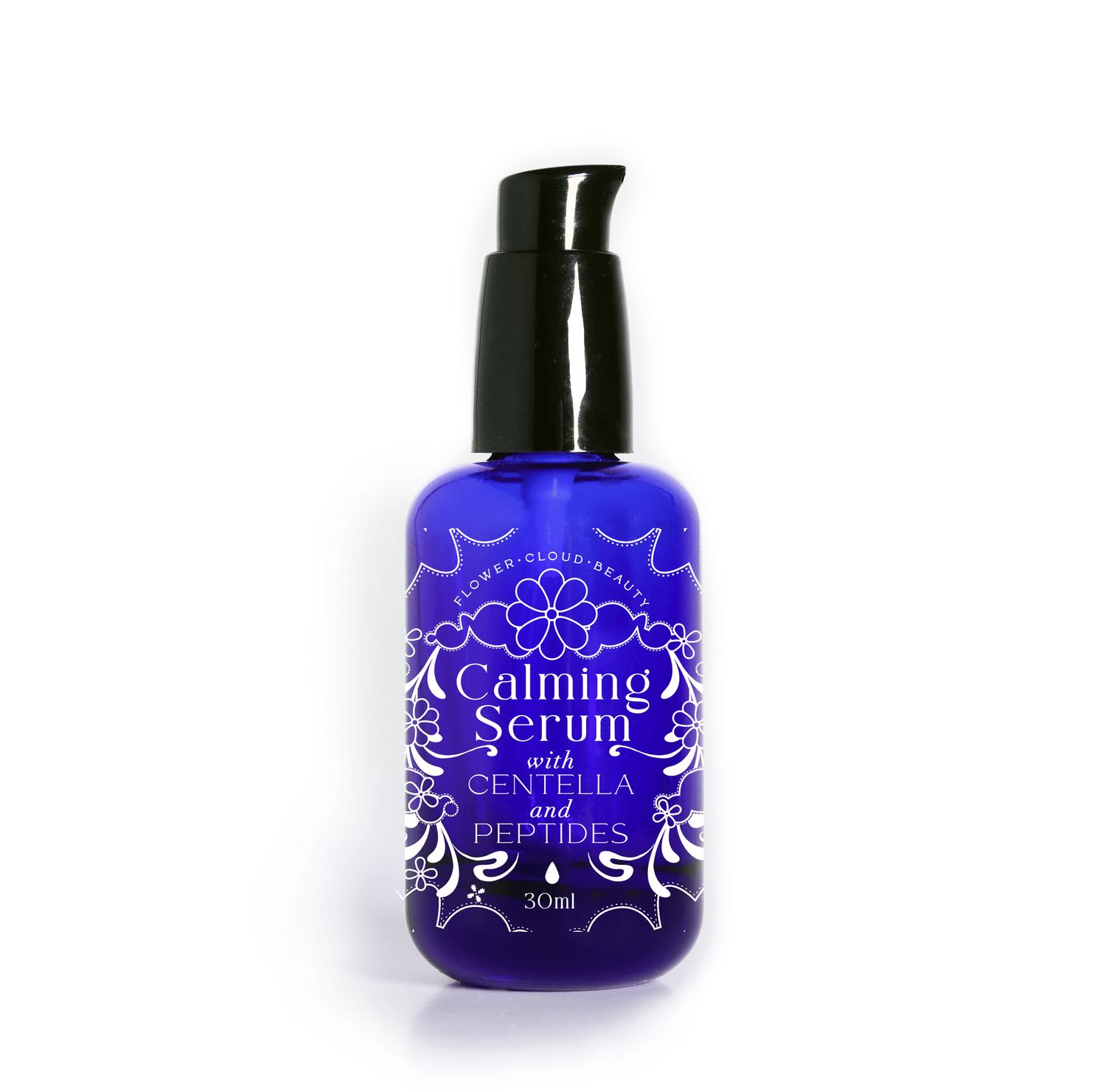
If you'd like to try a centella asiatica serum, we'd love for you to try our Calming Serum:
Refine by
Powered by Lightspeed
Display prices in:USD